When shopping for soap, you have plenty of options, but one of the most basic decisions is whether to choose bar or liquid soap. Both can be used to wash your hands and body, and both come in a variety of formulas, fragrances, and ingredients.
So, is one actually better than the other?
Not really. Bar and liquid soap are basically the same thing, just in different forms, and they’re equally effective at getting things clean. The difference mostly lies in cost, convenience, and how each treats your skin.
The most obvious difference between bar and liquid soap is their consistency. Bar soap is solid, while liquid soap is fluid. They’re both made through a process called saponification. When fats or oils (like animal fats or plant-based oils) are combined with an alkaline substance, you get soap.
Whether something is bar or liquid soap comes down to which alkaline is used. Bar soap is typically made with sodium hydroxide (lye), while liquid soap is generally made with potassium hydroxide.
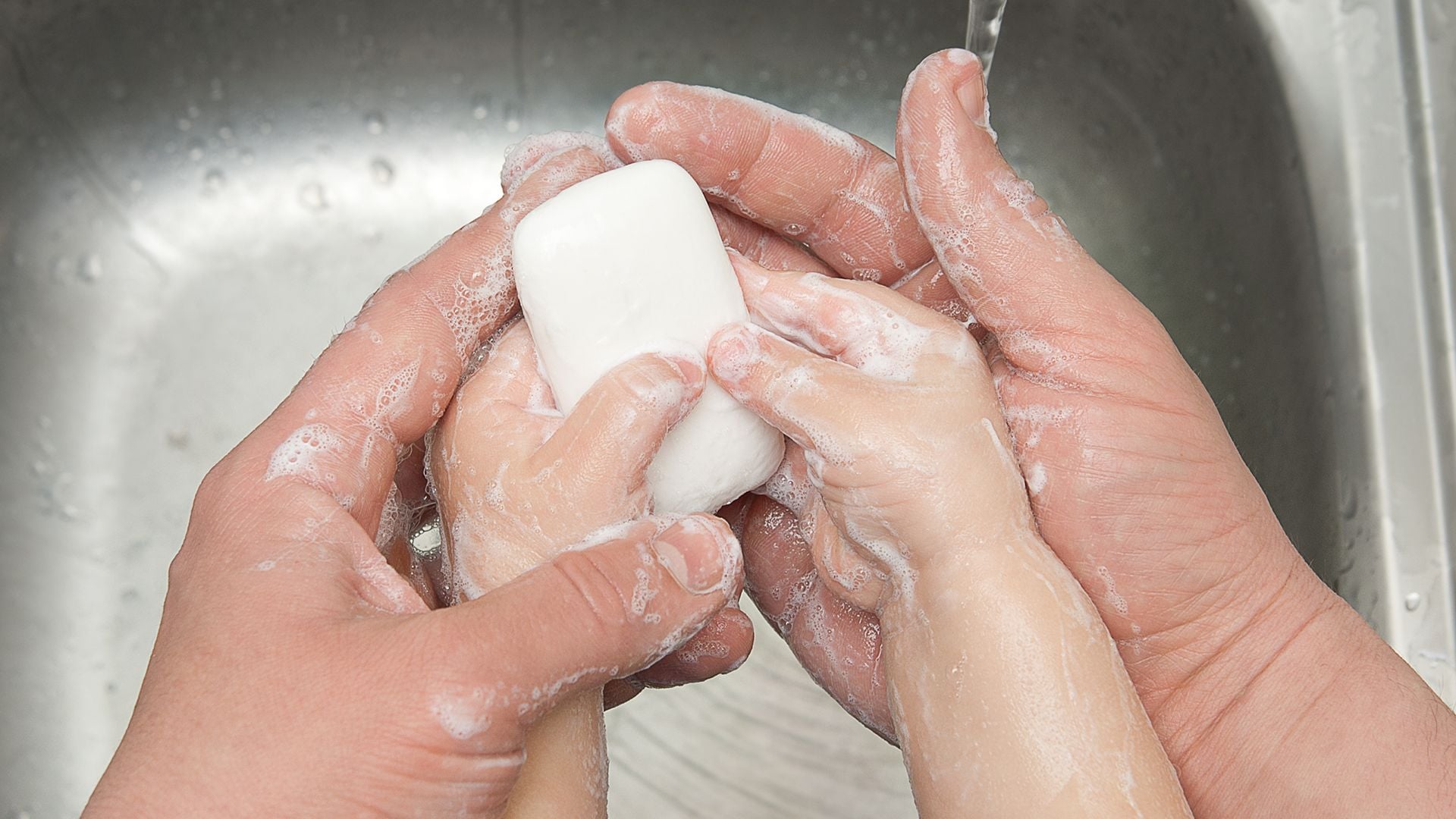
Regardless of consistency, bar and liquid soap have ingredients called surfactants that help loosen and remove dirt, oils, and germs from your skin. And, as the CDC notes, both are equally effective at doing exactly that. What matters is that you’re using them correctly.
>>LEARN: How does soap work and why do we use it?
One of the biggest concerns about bar soap is that it seems less hygienic than liquid soap. Even though it’s soap, multiple people touch it with their dirty hands. And since soap doesn’t actually kill germs, won’t the germs just hang out there until someone washes the soap?
It’s true that a bar of soap comes into direct contact with your skin. And it’s also true that bacteria or microorganisms may survive on a bar of soap, especially when the bar sits in standing water. That moist environment plus skin cells and body oils creates a place where bacteria may survive and even thrive.
However, finding bacteria on bar soap doesn’t necessarily mean it will spread.
In 1988, researchers deliberately contaminated bars of soap with bacteria and asked 16 people to wash their hands using the “infected” soap bars. Afterward, researchers tested the participants’ hands and found no trace of the bacteria they’d placed on the soap.
The results don’t mean that bar soap is risk-free. It just means it may not be as unhygienic as you might think. However, it also means that liquid soap has the advantage.
Because people dispense soap from a pump to their hands, their skin doesn’t come into direct contact with the soap, making it less likely germs end up mixed into the soap. However, liquid soap can become contaminated if the pump isn’t properly cleaned before refilling the dispenser.
Bar soap has a reputation for being more drying than liquid soap. However, because most soap is made through saponification, both bar and liquid soap can be equally drying to your skin.
Saponification creates a naturally alkaline soap, which can temporarily affect your skin’s pH. Without getting into a long science lesson, the pH of your skin is neutral, while soap tends to be more alkaline (AKA, base). The difference in these pH levels makes it harder for your skin to hold water, which is why it feels dry after using soap.
However, both bar and liquid soaps come in formulas that are more gentle on skin. Some include moisturizing ingredients, like glycerin, while others exclude fragrances or other harsh ingredients that can irritate sensitive skin.
In most cases, bar soap is the more economical option, but the price of a bar or bottle of soap doesn’t tell the whole story.
A single bar of soap can last for weeks, depending on its size, how often it’s used, and how it’s stored. And it’s often sold in minimal packaging, like a paper wrapper or cardboard box. Liquid soap is generally used up more quickly than bar soap, often because people may dispense more soap than they need. It’s also sold in plastic bottles, which include the cost of the container plus the dispensing mechanism, often pushing up the price compared to bar soap.
You may have heard that bar soap is better for the environment and, in some respects, that’s true. Bar soap generally has an advantage when it comes to packaging. Many bars are sold in cardboard boxes, paper wrappers, or minimal packaging, while liquid soaps are commonly packaged in plastic bottles, though large refill containers may use less material.
However, packaging is only one part of the equation, and a soap’s carbon footprint is made of a number of factors that can be hard to control for.
A 2022 study modeled what would happen if the entire population of the UK washed their hands 15 times a day for a year. Obviously, that’s a lot of handwashing, but the results suggested that overall, bar soap may be the more environmentally friendly option.
The study measured the projected environmental impact of bar and liquid soap across 16 categories. Bar soap came out ahead in 13, with the biggest difference being in carbon emissions. Bar soap produces approximately 46% fewer emissions than liquid soap, but packaging was a tiny part of the impact of either soap. So, why such a big gap?
The model assumed people use more liquid soap than bar soap. The more soap you use each time you wash your hands, the more manufacturers make to meet demand. That means they use additional ingredients and resources to produce and ship it, all of which have an environmental impact.
However, the researchers acknowledged some limitations to their results. For example, the model assumed people used the same amount of bar and liquid soap, which doesn’t account for how each is formulated. One gram of bar soap isn’t the same as one gram of liquid soap. They also found that using liquid soap could reduce its environmental impact. So, while bar soap came out ahead, it doesn’t mean bar soap is automatically more environmentally friendly than liquid soap.
While bar and liquid soap are equally effective at removing dirt and germs, liquid soap is often the more practical option in high-traffic settings.
In classrooms, workplaces, and public restrooms, people need quick, convenient access to soap. Unlike bar soap that must be shared and passed to the next user, a liquid soap dispenser can be mounted between sinks. One person dispenses what they need, then starts scrubbing, while the next person takes their turn.
With a bar of soap, one person has to grab the soap, lather up under running water, then pass the bar to the next user, without dropping the soap in between. The second person has to wait much longer for the first person to finish with the soap, which means it takes longer to wash their hands.
It’s also difficult to keep bar soap dry in these environments. With so many people washing their hands all day long, a shared bar may not have enough time to dry between uses, especially if it’s left in a soap dish that’s full of water.
Ultimately, choosing between bar and liquid soap comes down to personal preference and where you plan to use it.
Bar soap can be an economical, low-packaging choice for everyday bathing and personal handwashing. Liquid soap offers convenient dispensing, easy storage, and practical advantages in bathrooms shared by multiple people.
Whichever you prefer, both are equally effective at cleaning your skin. What matters most is choosing a product that meets your needs and using it regularly.
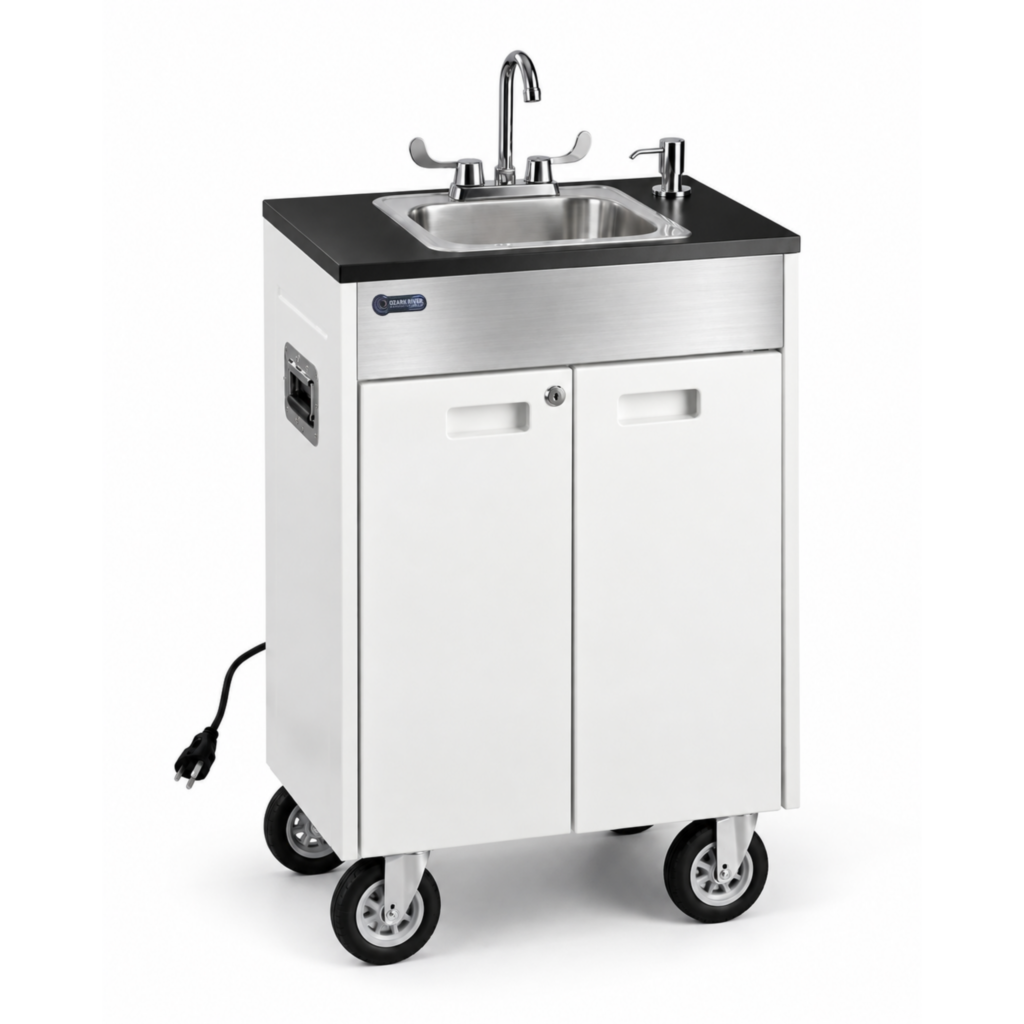
But soap works best when it’s paired with running water, something you don’t always have access to, like at an outdoor event or in a barn. That’s where a portable sink comes in. These self-contained units don’t require any plumbing. Just a little bit of power (or pumping with your foot) and viola! You’ve got fresh, clean, running water that makes cleaning up with soap a breeze.
At All Portable Sinks, we have a nearly endless variety of portable sink solutions, and many of our models include integrated soap dispensers, making it easy to get stuff clean. Our sinks are perfect for:
Contact us today, and we’ll match you with the right portable sink for your needs, or browse our full lineup of products.